


Introduction
The question lands in every marketing conversation right now: has Google’s AI search made traditional SEO obsolete?
The short answer is no. The complete answer is more useful than that.
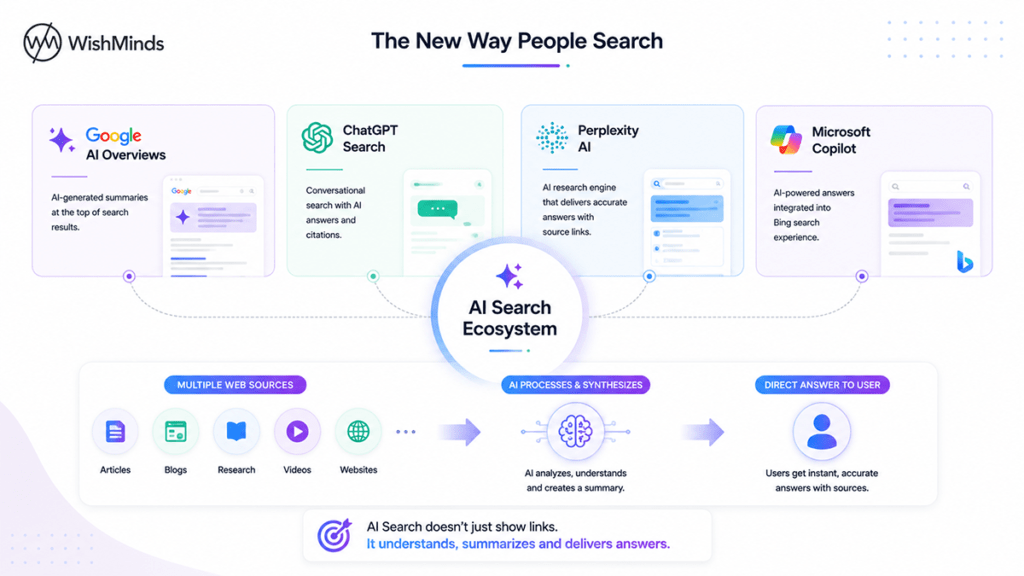
Search is undergoing a genuine and significant transformation. Google AI Overviews, ChatGPT Search, Perplexity AI, and Microsoft Copilot in Bing have changed how a growing proportion of users interact with search. For some query types, AI-generated answers are now the primary visible element on the search results page. Some businesses are seeing organic traffic patterns shift in ways that feel unfamiliar and hard to attribute.
But organic search is not dead. Rankings are not irrelevant. The businesses that invested in building genuine authority, producing high-quality content, and maintaining strong technical foundations are not watching their investment evaporate. They are watching the rules of the game evolve, and the ones adapting thoughtfully are maintaining and in some cases growing their visibility.
This article is the complete guide for businesses navigating this shift. It covers what Google’s AI search actually does, what has genuinely changed for SEO, what has stayed the same, how to adapt your strategy effectively, and what to expect from the investment over time.
Understanding Google’s AI Search in 2026
Before evaluating what has changed, it is important to understand precisely what Google’s AI search actually is and how it operates.
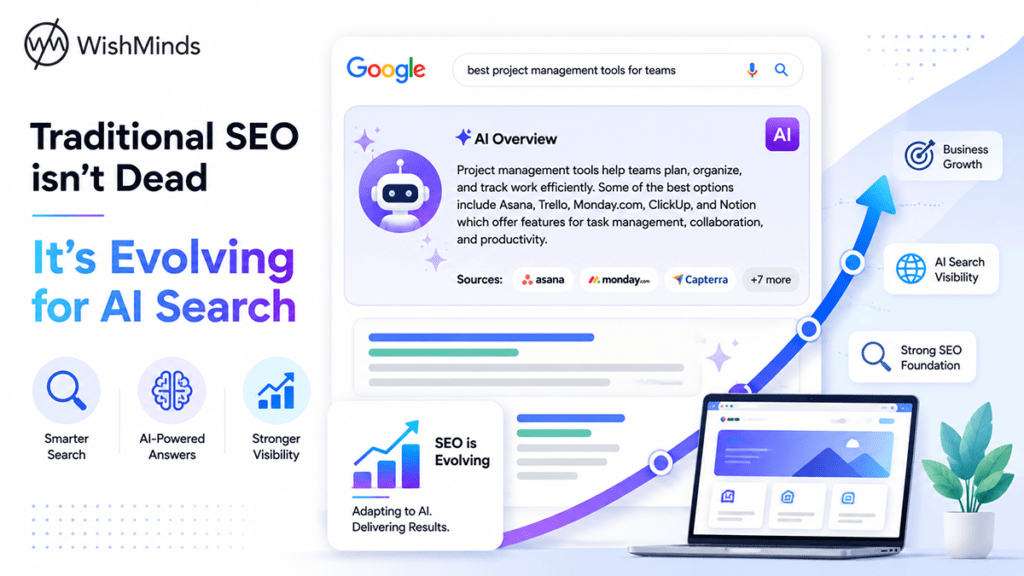
Google AI Overviews are AI-generated summaries that appear at the top of Google search results for a growing range of query types. They synthesise information from multiple web sources and present a direct response to the user’s question, typically before any traditional organic results are visible on screen. Introduced to search results in the United States in 2024 and progressively expanded globally since, AI Overviews are now a standard feature of the search experience for many users.
The query types where AI Overviews appear most frequently include informational searches seeking explanations or definitions, how-to queries seeking guidance on a process, comparison queries evaluating options, and research-oriented queries where users are gathering information across multiple sources.
The query types where AI Overviews are significantly less prominent include transactional queries where users intend to make a purchase or contact a supplier, local searches seeking nearby businesses or services, navigational queries seeking a specific website or brand, and breaking news or time-sensitive information where AI systems tend to defer to traditional news results.
Beyond Google, the rise of AI-native search tools represents a parallel shift. ChatGPT Search, released by OpenAI, allows users to conduct web searches conversationally and receive synthesised responses with citations. Perplexity AI operates as a dedicated AI research tool with a growing user base that treats it as a primary search interface for research-intensive queries. Microsoft Copilot integrates AI responses into Bing search, drawing on web content alongside Microsoft’s own knowledge sources.
These platforms operate on different underlying technology from Google AI Overviews but share the common pattern of generating synthesised answers from multiple sources rather than presenting a ranked list of links. For businesses whose potential customers use any of these platforms for research, visibility in AI-generated answers is commercially relevant regardless of traditional Google ranking performance.
What Has Genuinely Changed for SEO
Here is an honest assessment of what is different in 2026 compared to the pre-AI search landscape.
Click-Through Rates for Informational Queries Have Declined for Some Businesses
For queries where AI Overviews provide comprehensive answers, a proportion of users receive the information they need without clicking through to any website. This is a measurable effect that shows up in analytics data for businesses with significant informational content targeting research-stage queries.
The extent of the impact varies considerably by industry, query type, and the comprehensiveness of AI-generated answers for specific searches. It is not universal, and it does not affect all content categories equally. But for businesses whose content strategy is heavily weighted toward informational queries, it is a real change that deserves a real response.
Content Structure Has Become a More Critical SEO Factor
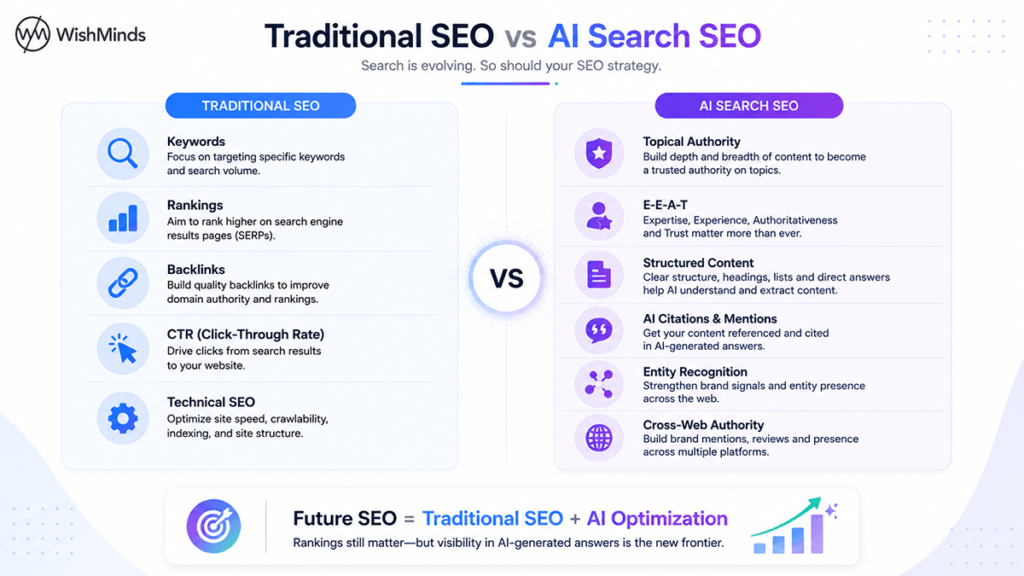
AI systems extract information from web content to construct their generated answers. Content that is clearly structured with descriptive headings, direct answers that appear early in each section, and logical organisation from which key information can be efficiently extracted is more likely to be cited than content that buries key points in unstructured prose.
This has elevated the practical importance of content structure beyond what traditional SEO alone demanded. A page that ranks well for a query but is poorly structured for AI extraction may be overlooked in favour of a page with slightly lower traditional rankings but superior structural clarity.
Topical Authority Matters More Than Individual Page Optimisation
AI systems develop an understanding of which sources are credible and authoritative across specific subject areas based on the breadth and quality of their content in those areas. A website with a single well-optimised page targeting a specific keyword is less likely to be recognised as an authoritative source than one with comprehensive, interconnected coverage of the broader topic.
This shifts the emphasis of effective SEO from optimising individual pages for specific queries toward building topical depth and authority across subject areas that are commercially relevant to the business.
Cross-Web Authority Signals Have Increased in Importance
AI systems evaluate source credibility based not only on the content of your website but on how your brand is referenced, cited, and recognised across the broader web. Mentions in reputable industry publications, citations in research and authoritative content, and a consistent presence across credible external platforms all contribute to how AI systems perceive your brand as a trustworthy source.
This makes the activities traditionally classified as off-page SEO, digital PR, earned media, and authority building across external platforms, more commercially important than they were when their primary value was link equity for traditional rankings.
Monitoring Search Visibility Has Become More Complex
Traditional rank tracking tools show you where your pages rank for specific keywords in traditional organic results. They do not tell you whether your content is being cited in AI-generated answers for those same queries, how frequently, or how your citation rate compares to competitors.
Effective search visibility monitoring in 2026 requires a parallel practice of testing priority queries across major AI search platforms and tracking citation patterns over time. This is less automated than traditional rank tracking but provides essential visibility into a growing dimension of how potential customers encounter your brand through search.
What Has Not Changed for SEO
Equally important as understanding what has changed is understanding what remains as relevant and valuable as it ever was.
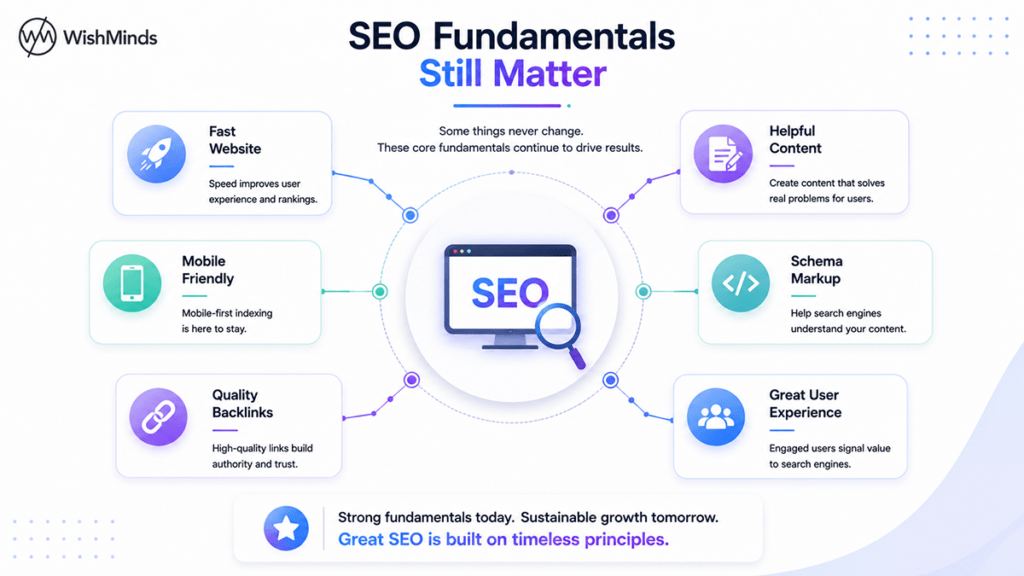
Technical SEO Fundamentals Remain Critical
Page speed, mobile performance, site crawlability, structured data markup, URL structure, and core technical performance continue to influence how well your content is discovered, indexed, and presented in search results. Technical SEO has not been made irrelevant by AI search. It remains the foundation on which all other search optimisation builds.
Sites with poor technical foundations that struggled in traditional search continue to struggle in AI search. The quality signals that structured data, fast-loading pages, and clean site architecture provide benefit visibility across all search environments.
Content Quality and Genuine Usefulness Still Determine Long-Term Performance
AI search has not changed the underlying principle that content which genuinely serves user needs outperforms content that exists primarily to target keywords. If anything, AI search has sharpened this principle by making it significantly harder for thin or generic content to earn any form of search visibility, whether through traditional rankings or AI citations.
The businesses that invested in building genuinely useful, expert-level content are the ones best positioned in the AI search landscape because the quality standards they were already meeting are the standards AI systems apply when selecting sources.
High-Quality Backlinks and External Recognition Remain Valuable
The value of earning high-quality, editorially placed backlinks from authoritative and topically relevant sources has not diminished. External recognition of your content’s value continues to contribute meaningfully to both traditional search rankings and AI search source authority.
The emphasis has evolved toward quality and topical relevance over volume, but the fundamental principle that external endorsement of your expertise matters to search visibility holds as firmly as it ever did.
User Experience and Conversion Optimisation Remain Essential
Getting visibility in search, whether through traditional rankings or AI search citations, is only part of the commercial equation. What happens when visitors arrive at your website determines the commercial value of that visibility. Strong user experience, clear calls to action, and effective conversion optimisation remain as important as ever to turning search visibility into business outcomes.
Local SEO Is Largely Unaffected
For businesses that rely on local search visibility, Google Business Profile optimisation, local citation consistency, location-based content, and customer review management all remain as important as they were before AI search became prominent. Local queries continue to be served primarily through map results and local listings rather than AI Overviews.
How to Adapt Your Strategy Effectively
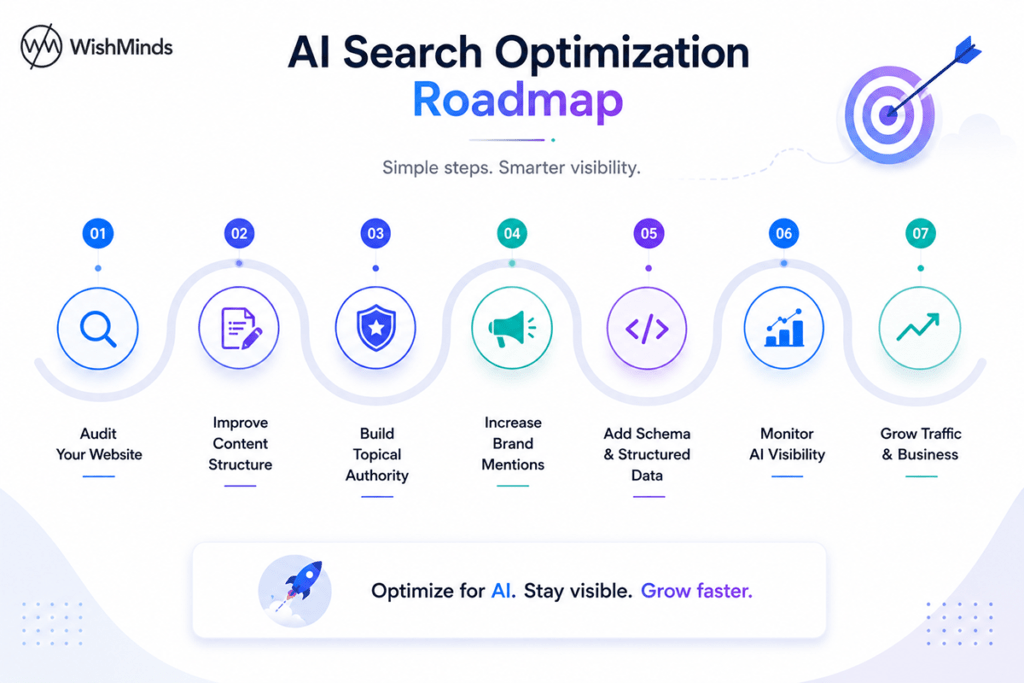
Adapting to the AI search landscape does not require rebuilding your entire SEO programme. It requires extending what is working to address new dimensions of search visibility while maintaining the foundations that have always underpinned strong performance.
Audit Your Current AI Search Position
Before changing anything, understand where you stand. Test your twenty to thirty most commercially important queries across Google AI Overviews, ChatGPT Search, and Perplexity. Record whether AI-generated answers appear for each query, which sources are cited, whether your domain is among them, and which competitors appear in your place where you are absent.
This diagnostic exercise gives you a specific, evidence-based picture of your AI search visibility rather than a response to general market anxiety. The findings will identify your actual gaps rather than assumed ones.
Strengthen Content Structure for AI Extractability
Review your priority content pages for the structural characteristics that support AI extraction. Each major section should open with a direct, concise answer to the question it addresses. Key information should be immediately accessible rather than reached only after extensive preamble. FAQ sections should directly address the specific questions your audience searches for. Headings should be descriptive and specific rather than generic.
Applying these improvements to existing high-authority pages is typically more efficient than creating new content, and the pages that already rank well are the best candidates to also appear in AI-generated answers once their structure is improved.
Build Topical Authority Systematically
Develop a content strategy that builds comprehensive, interconnected coverage across your core topic areas rather than targeting isolated keywords. Identify the full range of questions your potential customers ask within each subject area. Map out the content needed to address those questions comprehensively. Create internal linking that connects related content so that the overall topical coverage of your site is clear and navigable.
This topical depth signals to AI systems that your site is a genuinely authoritative resource on your subject area rather than a collection of individual pages targeting specific queries.
Invest in Cross-Web Authority Building
Make digital PR and earned media a core component of your search visibility investment rather than an optional extra. Contribute expert commentary to industry publications. Seek opportunities to be featured in authoritative external content within your sector. Build a presence on reputable professional platforms and directories.
These activities build the cross-web authority signals that AI systems use to evaluate source credibility and make your brand more likely to be cited in AI-generated answers across multiple platforms, not just Google.
Align Your Broader Digital Marketing With Your SEO Strategy
Working with a Professional SEO Company that integrates SEO with broader Online Marketing Services creates a compounding effect on authority signals. Content amplified through Social Media Advertising earns more shares and mentions. Earned media generates backlinks and citations. Brand recognition built through consistent digital presence influences how users engage with your content when they encounter it in search.
The businesses with the strongest long-term search visibility are those that treat SEO as one component of an integrated digital marketing strategy rather than a standalone channel.
Apply Structured Data Markup Comprehensively
Schema markup helps both traditional search engines and AI systems understand the content type, context, and key information within your pages more accurately. FAQ schema is particularly valuable because FAQ content is highly extractable and frequently appears in AI-generated answers. Article schema, Organisation schema, and relevant industry-specific schema types all contribute to better content understanding across search environments.
Expand Your Reporting Framework
Update your search performance reporting to include AI search visibility metrics alongside traditional ranking and traffic data. Track which priority queries have AI Overviews, whether your domain is cited, how citation frequency changes over time, and how your AI search visibility compares to key competitors. This expanded measurement framework ensures you have a complete picture of your search visibility rather than only the portion that traditional tools measure.
Common Challenges and How to Address Them
Declining traffic on informational content that previously performed well
Assess which specific content categories are affected and whether the traffic those pages received was generating meaningful commercial outcomes. If informational traffic was primarily top-of-funnel with limited conversion, the priority may be to focus on ensuring your brand is visible in AI-generated answers for brand-building purposes while concentrating conversion optimisation attention on higher-intent traffic categories.
Difficulty identifying what to change versus what to leave alone
Use your AI search audit findings to prioritise. Queries where you have strong traditional rankings but are absent from AI-generated answers are the highest-priority targets for content restructuring. Queries where you have both strong traditional rankings and AI search citations are working well and need maintenance rather than change.
Leadership pressure to make immediate strategic shifts based on market anxiety
Present your specific data rather than responding to general market narratives. Show leadership your actual AI search visibility position for your specific queries rather than applying general industry commentary to your business. Data-led conversations produce better decisions than anxiety-led ones.
Budget uncertainty around where to invest
Reframe the conversation around search visibility broadly rather than organic traffic alone. AI search citations build brand awareness with potential customers even without a click. The long-term pipeline impact of brand presence across AI search deserves to be part of the investment case rather than only direct traffic attribution.
Results to Work Toward
Businesses that adapt their SEO strategy thoughtfully to the current landscape can work toward several meaningful outcomes. The pace of improvement depends on your starting authority level, the competitiveness of your market, and the consistency of your investment.
Over a six to twelve month horizon of consistent effort, well-positioned businesses commonly target measurable improvements in AI search citation rates for priority queries, maintained or growing overall search visibility despite changes in how results are presented for some query types, and stronger overall brand authority across the digital landscape through cross-web presence building.
Alongside these search-specific outcomes, the content quality improvements that AI search readiness requires also tend to produce improvements in engagement metrics and conversion rates from the traffic that does reach the website, as clearer, better-structured content serves human readers more effectively than the content it replaces.
Expert SEO and Digital Marketing Support at WishMinds
Adapting your SEO strategy to the AI search landscape requires a combination of current platform knowledge, content strategy expertise, technical SEO capability, and an integrated approach to building authority across both your website and the broader web.
WishMinds Technologies is a full-service digital marketing agency with specialist capability across SEO, content strategy, digital PR, and Online Marketing Services designed for the 2026 search environment. We work with businesses across industries to audit current search visibility, identify specific AI search gaps, and build integrated strategies that improve performance across both traditional and AI search environments.
Our approach is grounded in your specific situation rather than in generic responses to general market trends. We start with evidence of how AI search is actually affecting your specific queries and competitive landscape before making strategic recommendations.
Whether you are protecting established search visibility, building from a less established position, or reassessing your entire digital marketing approach in response to the AI search shift, our team brings the depth of expertise and the breadth of service capability to support you effectively.
Book a consultation today with WishMinds and take the first step toward a search strategy that works across the full landscape of how your customers find you in 2026.
Frequently Asked Questions
1. Is traditional SEO dead in 2026?
No. Traditional organic search continues to drive significant commercial traffic and remains an important customer acquisition channel. AI search has introduced new dimensions to search visibility but has not replaced traditional search. The most effective strategies address both environments rather than choosing between them.
2. What are Google AI Overviews and how do they affect my business?
Google AI Overviews are AI-generated summaries that appear at the top of Google search results for certain query types. They synthesise information from multiple sources and present direct answers to user questions. They are most prominent for informational, comparison, and research queries and are less prevalent for transactional and local searches. Their commercial impact depends significantly on which query types are most important to your business.
3. How do I get my business cited in Google AI Overviews?
There is no guaranteed method. However, content that is well-structured with direct answers, demonstrates genuine expertise through strong EEAT signals, comes from a website with established domain authority, is current and accurate, and is recognised as credible through cross-web citations is more likely to be selected. Consistent investment in these signals over time is the most reliable approach.
4. Does ranking well in traditional search guarantee AI Overview visibility?
Not necessarily. Traditional ranking position and AI Overview citation are influenced by overlapping but not identical signals. Content structure, directness, and authority signals specific to AI search selection may cause pages with lower traditional rankings to appear in AI Overviews over higher-ranking but less well-structured pages.
5. What is EEAT and why does it matter for AI search?
EEAT stands for Experience, Expertise, Authoritativeness, and Trustworthiness. These are the quality signals Google uses to evaluate content for both traditional search quality assessment and AI search source selection. Strengthening EEAT through demonstrated expertise, accurate content, and external recognition improves visibility in both traditional and AI search environments.
6. How does structured data markup help with AI search?
Structured data helps search engines and AI systems understand the content type, context, and key information within your pages more accurately. FAQ schema, Article schema, and Organisation schema are particularly relevant for AI search visibility. They help AI systems identify and extract relevant content more reliably.
7. Should we reduce PPC investment and shift to SEO, or vice versa?
PPC and SEO serve different functions and different stages of the buyer journey. The right balance depends on your specific business model, the query types most important to your commercial goals, and your available budget. For most businesses, the most effective approach involves both channels working together rather than one replacing the other.
8. How long does it take to improve AI search visibility?
Timelines vary based on your starting authority level, market competition, and investment consistency. Improvements in specific content areas after targeted restructuring can sometimes be visible within weeks for pages with strong existing authority. Building broader topical authority and cross-web citation presence is a medium-term investment with results typically becoming more pronounced over a six to twelve month horizon.
9. Does AI search affect all industries equally?
No. Industries where customers research extensively before making decisions tend to be most affected by AI Overviews, including professional services, technology, financial services, healthcare information, and education. Industries with primarily transactional search intent and local service businesses are generally less immediately affected.
10. How do we measure our visibility in AI search?
AI search visibility measurement is less standardised than traditional rank tracking. Regularly testing your priority queries in Google AI Overviews, ChatGPT Search, and Perplexity, and recording which sources are cited, provides a practical monitoring framework. Tracking changes in citation frequency over time and comparing your visibility to competitors gives you an actionable picture of your AI search position.
11. What is topical authority and how do we build it?
Topical authority refers to a website’s recognised expertise and credibility across a specific subject area, as perceived by search engines and AI systems. It is built by creating comprehensive, interconnected content that covers a topic area in depth, earning external citations from reputable sources within the relevant field, and maintaining consistent content quality and accuracy over time.
12. Is it worth working with a specialist SEO agency for AI search?
Yes, particularly for businesses that need to adapt quickly or that are in competitive markets where search visibility is a significant commercial factor. A specialist agency with current expertise in both traditional SEO and AI search optimisation can audit your specific position, identify gaps, and build a strategy that is grounded in evidence rather than generic advice.
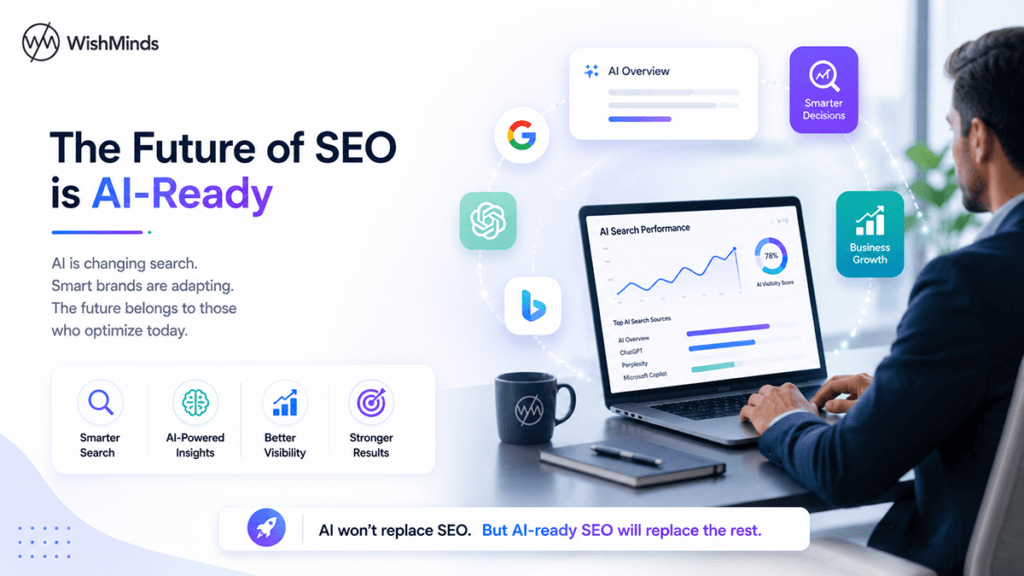
Traditional SEO Is Not Dead. But Standing Still Is Not an Option Either.
The search landscape in 2026 is more complex than it was two years ago. It is also full of genuine opportunity for businesses that understand what has changed and respond to it strategically.
The fundamentals that have always driven strong search performance still apply. The businesses with the best content, the clearest structure, the deepest expertise, and the strongest authority are the ones performing best across both traditional and AI search environments.
What has changed is the full picture of what search visibility means and how it is built. Adapting to that picture, rather than defending a version of search that no longer fully exists, is the strategic imperative for 2026.
WishMinds Technologies is ready to help you build that strategy and execute it effectively across every channel that contributes to your search visibility.
Book a consultation with WishMinds today and take the first step toward search visibility that works across the full landscape of how your customers find you in 2026 and beyond.