

Fabric Data Science & AI Solutions
Fabric Data Science & AI Solutions for Predictive Insights
Build, deploy, and scale AI models directly within Microsoft Fabric
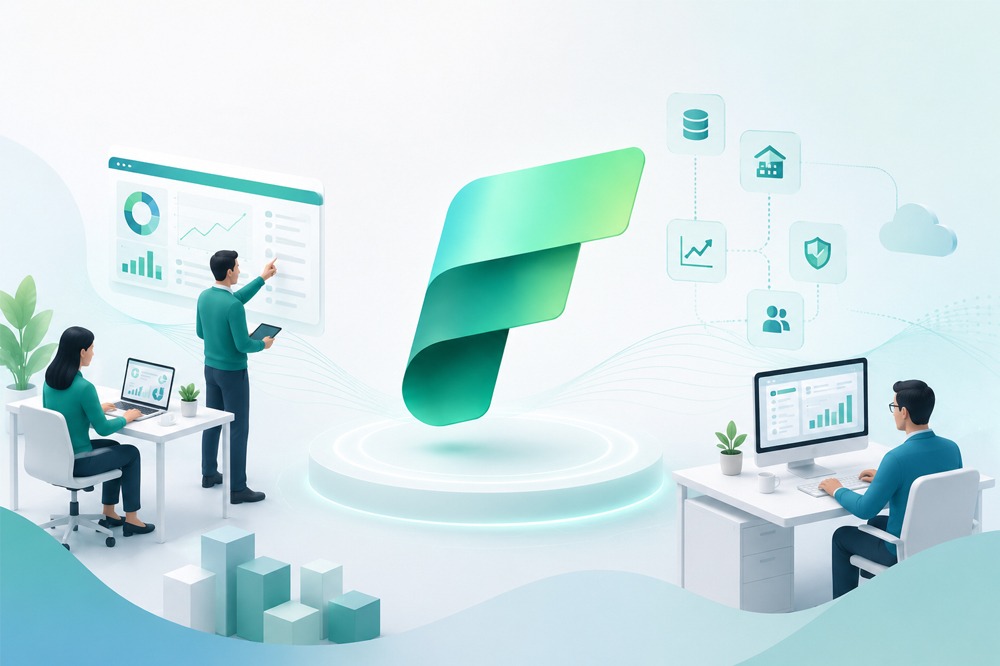
Our Fabric Data Science & AI Solutions enable organizations to build and operationalize machine learning models within Microsoft Fabric. From data exploration to deployment, we create end-to-end AI solutions that integrate predictions into business workflows and Power BI dashboards — enabling a shift from descriptive to predictive decision-making.
What is Fabric Data Science And AI Solutions
Fabric Data Science & AI Solutions is a comprehensive approach to building, deploying, and operationalizing machine learning models within Microsoft Fabric. It enables organizations to transform raw data into predictive insights by integrating advanced analytics directly into their data ecosystem.
This service addresses the challenge of moving beyond static reporting by embedding machine learning into business workflows. Using Fabric Notebooks, MLflow experiment tracking, and Azure Machine Learning integration, models can be developed, tested, and deployed efficiently.
Predictions generated from these models can be integrated into Power BI dashboards, allowing business users to act on forward-looking insights rather than historical data. This creates a unified environment where data science and business intelligence work together seamlessly.
What is Fabric Data Science And AI Solutions
Fabric Data Science & AI Solutions is a comprehensive approach to building, deploying, and operationalizing machine learning models within Microsoft Fabric. It enables organizations to transform raw data into predictive insights by integrating advanced analytics directly into their data ecosystem.
This service addresses the challenge of moving beyond static reporting by embedding machine learning into business workflows. Using Fabric Notebooks, MLflow experiment tracking, and Azure Machine Learning integration, models can be developed, tested, and deployed efficiently.
Predictions generated from these models can be integrated into Power BI dashboards, allowing business users to act on forward-looking insights rather than historical data. This creates a unified environment where data science and business intelligence work together seamlessly.
Key Benefits
And what you get from it
Our process and How it works







Industries We Serve
Use Cases
Tools, Technologies & Platforms
Why choose WishMinds
WishMinds delivers Fabric Data Science & AI Solutions with a structured and methodical approach to machine learning implementation. Our focus is on building scalable, production-ready models that integrate seamlessly into business workflows.
We emphasize strong data foundations through feature engineering and experiment tracking, ensuring that models are both reliable and reproducible. Our approach aligns data science processes with business objectives, enabling meaningful and actionable outcomes.
By leveraging Fabric-native capabilities along with Azure Machine Learning and Microsoft Foundry, we ensure that every solution is optimized for performance, scalability, and integration. Our commitment is to deliver AI solutions that are not only technically sound but also directly aligned with business impact.

FAQ
Frequently Asked
Questions
Fabric Data Science enables organizations to build, train, and deploy machine learning models within Microsoft Fabric. It provides tools for the complete ML lifecycle, from data preparation to prediction deployment.
Fabric connects with Azure Machine Learning to enable advanced model training, AutoML capabilities, and scalable deployment of machine learning models.
MLflow is used for experiment tracking and model management. It allows teams to track model performance, manage versions, and ensure reproducibility.
Yes, model predictions can be embedded into Power BI dashboards, enabling users to visualize predictive insights alongside traditional metrics.
Models for classification, regression, clustering, and forecasting can be developed using Python and Spark ML within Fabric.
Batch inference processes data at scheduled intervals, while real-time inference generates predictions instantly via APIs.
Implementation timelines vary based on complexity, but structured ML projects typically range from a few weeks to several months.
Industries such as retail, finance, healthcare, manufacturing, and logistics benefit from predictive analytics and AI-driven insights.
Yes, we cover the entire lifecycle including data preparation, model training, deployment, and monitoring.
Look for expertise in machine learning workflows, integration with business systems, and the ability to deliver scalable, production-ready models.
Move From Data to Predictive Intelligence
Unlock the power of AI within Microsoft Fabric. Build scalable machine learning models, integrate predictions into your workflows, and enable smarter, faster decision-making across your organization.
ExploreOur Solutions