


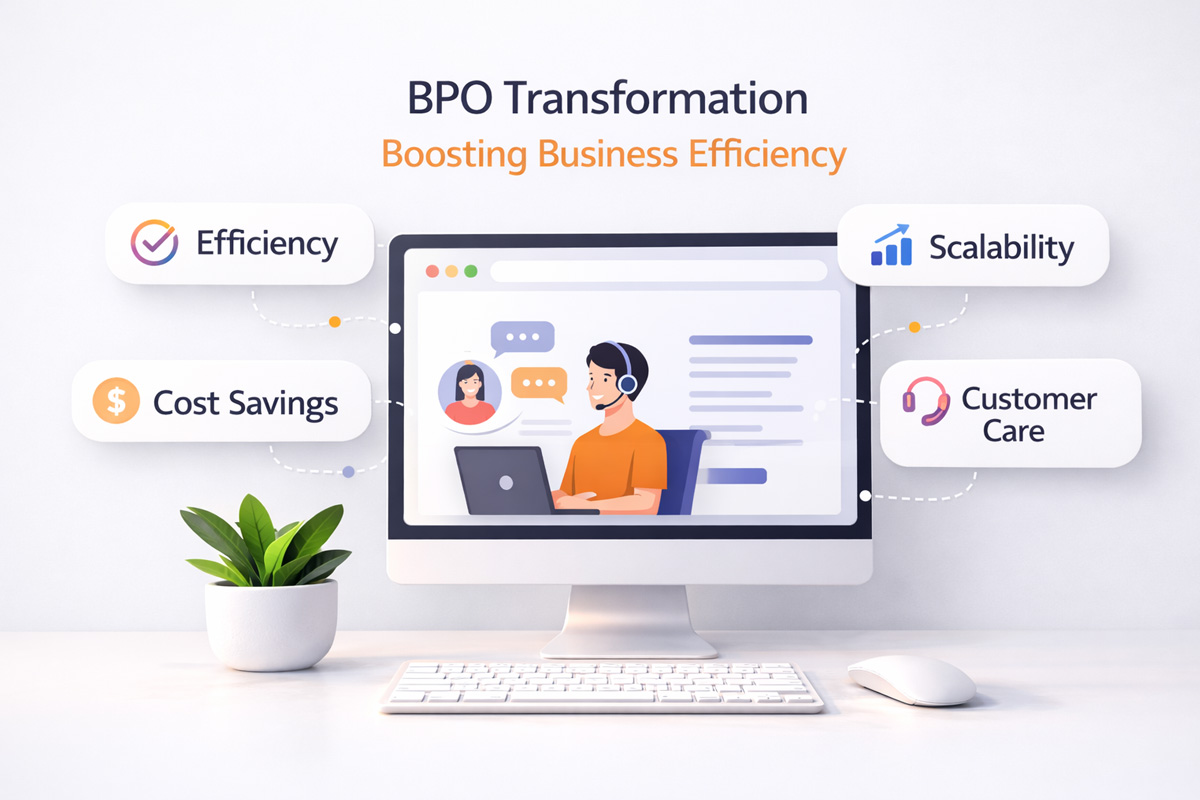
In today’s competitive business landscape, organizations are constantly seeking ways to optimize operations, reduce costs, and focus on core competencies. Business Process Outsourcing (BPO) has emerged as a strategic solution that enables companies to achieve these goals while maintaining high-quality service delivery.
Understanding BPO in the Modern Context
BPO involves contracting specific business processes to external service providers who specialize in those functions. This approach allows organizations to leverage specialized expertise, advanced technologies, and proven methodologies while maintaining focus on their core business objectives.
Key Areas for BPO Implementation
1. Customer Support Services
Modern BPO customer support goes beyond traditional call centers:
- Omnichannel Support: Integrated support across phone, email, chat, and social media
- 24/7 Availability: Round-the-clock customer service ensuring global coverage
- Multilingual Capabilities: Support in multiple languages for diverse customer bases
- Technical Expertise: Specialized knowledge for complex product and service inquiries
2. Data Processing and Analytics
BPO providers offer sophisticated data management services:
- Data entry and validation with high accuracy rates
- Document digitization and management
- Data analytics and reporting services
- Compliance with data protection regulations
3. Finance and Accounting
Financial BPO services include:
- Accounts payable and receivable management
- Payroll processing and benefits administration
- Financial reporting and analysis
- Tax preparation and compliance
Strategic Benefits of BPO Adoption
Cost Optimization
Organizations typically achieve 20-40% cost savings through BPO implementation by:
- Reducing operational overhead and infrastructure costs
- Eliminating recruitment and training expenses
- Converting fixed costs to variable costs
- Leveraging economies of scale from BPO providers
Access to Specialized Expertise
BPO providers bring specialized knowledge and experience:
- Industry-specific expertise and best practices
- Advanced technology and automation capabilities
- Trained professionals with relevant certifications
- Continuous process improvement methodologies
Scalability and Flexibility
BPO services provide operational flexibility:
- Quick scaling up or down based on demand
- Seasonal capacity adjustments
- Geographic expansion without infrastructure investment
- Risk mitigation through distributed operations
Technology Integration in Modern BPO
Today’s BPO services leverage cutting-edge technologies:
- Robotic Process Automation (RPA): Automating repetitive tasks for efficiency
- Artificial Intelligence: Intelligent routing, chatbots, and predictive analytics
- Cloud Computing: Scalable infrastructure and secure data management
- Advanced Analytics: Real-time insights and performance optimization
Selecting the Right BPO Partner
Choosing the right BPO provider is crucial for success:
- Evaluate Expertise: Assess provider’s experience in your industry and processes
- Technology Capabilities: Ensure advanced technology stack and security measures
- Quality Standards: Review certifications, compliance, and quality metrics
- Cultural Alignment: Ensure compatibility with your organization’s values and communication style
- Scalability: Confirm ability to grow with your business needs
Future Trends in BPO
The BPO industry continues to evolve with emerging trends:
- Increased automation and AI integration
- Focus on outcome-based service models
- Enhanced data security and privacy measures
- Specialized niche services and vertical expertise
- Sustainable and socially responsible outsourcing practices
WishMinds helps organizations navigate the BPO landscape, identifying optimal processes for outsourcing and partnering with the right service providers to achieve strategic business objectives.