


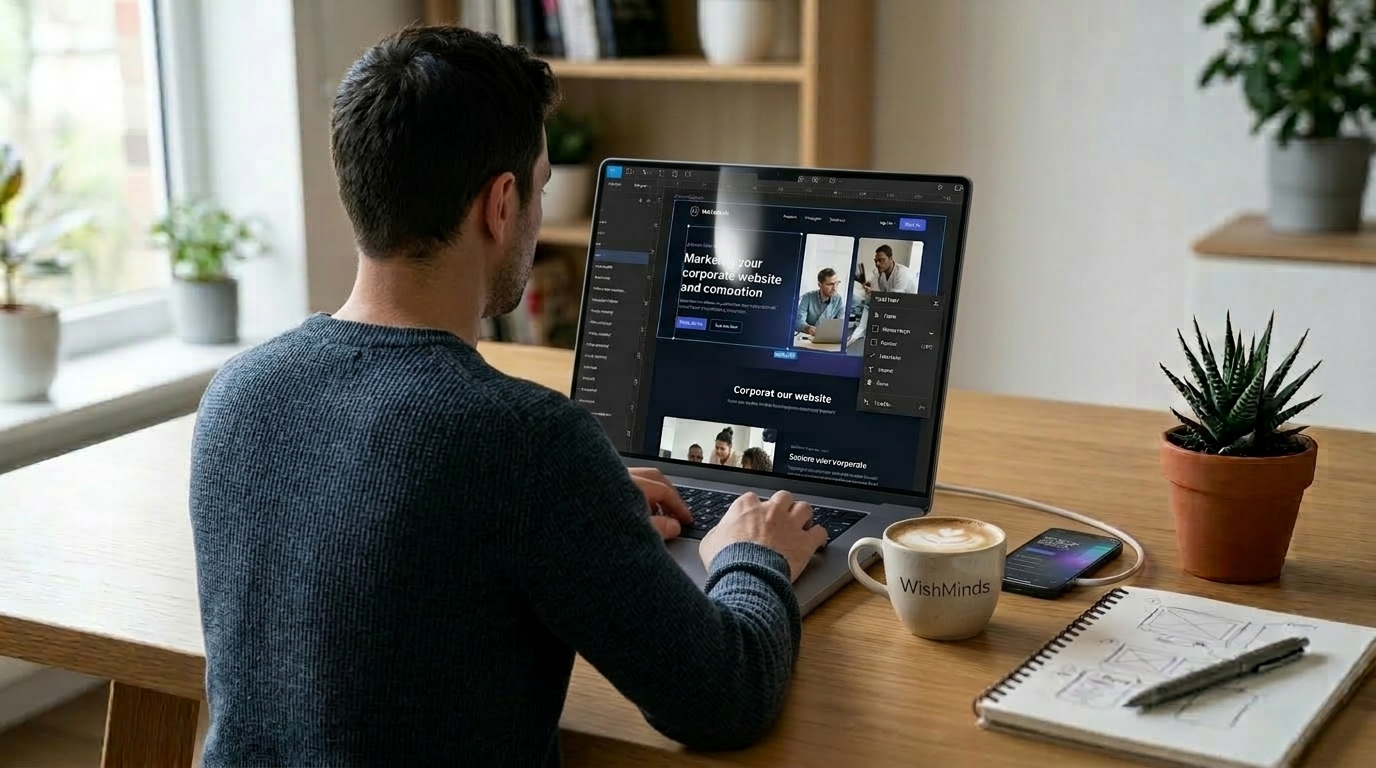
In 2026, a website is no longer just a digital brochure — it is a core business asset responsible for first impressions, lead generation, conversions, and brand credibility.
User expectations have evolved rapidly. People now expect websites to be:
- Fast
- Easy to navigate
- Visually engaging
- Accessible across all devices
This is why Web Design Trends 2026 focus strongly on user experience, performance, accessibility, and conversion psychology, rather than visual design alone.
This in-depth guide explores modern web design, UX UI trends 2026, and responsive web design 2026, showing how businesses can apply these trends to improve performance, engagement, and conversions across USA, Australia, Canada, UAE, UK, and India.
Personalised& User-Centric Web Experiences
In 2026, websites are no longer designed as one-size-fits-all platforms. Instead, they focus on user-centric layouts that adapt based on visitor intent, device type, and browsing behavior — without relying on artificial intelligence.
How Personalised UX Works
Websites now:
- Show different homepage sections for first-time vs returning visitors
- Adjust CTAs based on user location
- Priorities content based on device usage (mobile vs desktop)
Practical Use Cases
- Service websites showing localised messaging
- E-commerce stores highlighting popular or trending products
- Landing pages optimised for specific audience segments
This approach significantly improves conversion focused web design outcomes.

Mobile-First & Performance-Driven Design
Mobile First Web Design 2026 is no longer optional — it is essential for rankings, engagement, and conversions.
More than 70% of global users browse websites on smartphones, especially in India, UAE, and Australia.
What Defines Responsive Web Design 2026
- Mobile layouts designed first, desktop later
- Thumb-friendly navigation
- Clear vertical scrolling structure
- Lightning-fast load speeds
Performance Standards
- Pages should load under 3 seconds
- Minimal layout shifts
- Optimised images and scripts
Fast websites improve:
- Search rankings
- User retention
- Conversion rates
Minimalist Website Design with Conversion Focus
Minimalist website design trends continue to dominate in 2026 — but with a stronger emphasis on clarity and intent.
Key Characteristics
- One clear message per section
- Strong visual hierarchy
- Clean typography
- Focused CTAs
Minimalist layouts reduce distractions and guide users toward action, making them ideal for:
- Landing pages
- SaaS platforms
- Corporate websites
Popular 3D Web Design Examples3D & Interactive Website Experiences
Static pages struggle to hold attention in 2026. Interactive website UX is now a major differentiator.
Popular 3D Web Design Examples
- 3D product previews
- Scroll-based storytelling
- Interactive brand narratives
- Virtual tours
Industries using this effectively include:
- Real estate
- Luxury brands
- Technology companies
Dark Mode & AdaptiveColorSystems
Dark mode web design examples are now expected by users across devices.
Benefits of Dark Mode
- Reduced eye strain
- Improved accessibility
- Modern, premium appearance
- Better battery efficiency on mobile
Adaptive color systems allow websites to switch seamlessly between light and dark themes based on user preference.
Micro-Interactions & Motion UI
One of the most effective UX UI trends in 2026 is the rise of subtle motion elements.
Examples of Micro-Interactions
- Button hover animations
- Animated form validation
- Loading indicators
- Scroll-based cues
These small interactions:
- Improve usability
- Provide visual feedback
- Enhance user satisfaction
Accessibility-First Web Design
Accessibility first web design 2026 is no longer optional — it is essential for compliance, inclusivity, and SEO.
Core Accessibility Practices
- High contrast text
- Keyboard-friendly navigation
- Screen-reader compatibility
- Clear focus indicators
Accessible websites rank better and reach a wider audience.
Sustainable & Performance-OptimisedDesign
Sustainability is shaping modern web design in 2026.
Sustainable Design Principles
- Lightweight code
- Optimised media files
- Faster servers
- Reduced data usage
Efficient websites are better for:
- User experience
- Search rankings
- Environmental impact
Web Design Trends USA 2026
The U.S. web design market, valued at $22.7 billion with 6.5% annual growth, leads globally in AI adoption. American consumers expect hyper-personalized experiences, with 80% of purchases now occurring via mobile devices. Companies in tech hubs like Silicon Valley, Austin, and Boston prioritize trust-based UX and AI-citable content structures optimized for Google AI Overviews. Financial services, healthcare, and SaaS industries drive demand for enterprise AI solutions that balance personalization with data privacy compliance under regulations like CCPA.
Focus areas:
- Conversion-driven UX
- Interactive storytelling
- Scalable design systems
Web Design Trends Australia 2026
Australian businesses, operating in a market worth $679 million growing at 10.2% annually, prioritize locally hosted solutions for faster load times. Sydney and Melbourne-based companies focus aggressively on Core Web Vitals’ optimization to improve local SEO rankings. Australian consumers expect lightning-fast experiences, particularly in e-commerce and service industries like tourism, education, and mining. Content Delivery Networks (CDNs) with Australian edge servers are essential for meeting performance expectations across this geographically vast nation.
Focus areas:
- Minimalist layouts
- Accessibility compliance
- Mobile-first experiences
Web Design Trends Canada 2026
Canadian businesses increasingly prioritize environmental responsibility, aligning with national climate commitments. Web design agencies across Toronto, Vancouver, and Montreal emphasize sustainable hosting and carbon-neutral operations. Bilingual support (English French) requires careful optimization to prevent code bloat. Canadian consumers, particularly millennials and Gen Z, favor brands demonstrating genuine environmental stewardship. Sustainable web practices resonate strongly with Canadian values, offering competitive differentiation in crowded markets.
Focus areas:
- Inclusive UX
- Sustainable web practices
- Bilingual website design
Web Design Trends UAE 2026
Dubai’s luxury-focused economy demands premium digital experiences. UAE businesses, particularly in real estate and high-end retail, extensively utilize 3D visualization and virtual tours. Bilingual websites (Arabic and English) must maintain visual excellence in both languages while incorporating immersive elements. Property developers showcase off-plan developments through interactive 3D models, allowing international investors to explore unbuilt properties. The UAE’s tech-savvy, affluent population expects cutting-edge experiences that justify premium pricing.
Focus areas:
- Luxury visual design
- Multilingual interfaces
- WhatsApp-driven conversions
Web Design Trends UK 2026
British design agencies favor sophisticated, refined typography that balances innovation with tradition. London-based firms lead in kinetic typography experimentation, particularly in creative industries and luxury brands. UK businesses increasingly adopt Pantone’s 2026 Color of the Year, Cloud Dancer, paired with elegant serif fonts for timeless sophistication. The market emphasizes accessibility—ensuring animated typography doesn’t trigger motion sensitivity issues for users with vestibular disorders, aligning strict WCAG compliance requirements.
Focus areas:
- Accessibility-first design
- Typography-led layouts
- Performance-optimised UX
Web Design Trends India 2026
India’s web design market is experiencing explosive growth at 12.3% annually, reaching $1.57 billion. With 80% of internet users accessing the web exclusively through mobile devices, often on 3G or 4G networks, lightweight, fast-loading designs are paramount. Indian businesses prioritize cost-effective solutions that deliver maximum performance on minimal bandwidth. Progressive Web Apps have gained massive traction, especially in tier-2 and tier-3 cities where internet connectivity remains inconsistent.
Focus areas:
- Mobile-first UX
- Fast loading on low bandwidth
- Conversion-friendly layouts
Conclusion: Building a Future-Ready Website in 2026
The most successful websites in 2026 focus on users, performance, and conversions — not just visual appeal.
By adopting Web Design Trends 2026, prioritising modern web design, and implementing UX UI trends 2026, businesses can:
- Rank higher
- Engage users longer
- Convert more leads
This approach creates websites that are not only visually impressive but also profitable, scalable, and future-ready.